
If you’ve ever priced a Lagos to New York flight before and then checked U.S. visa appointment dates, you already know the pain: you can have money and still not have access. Now add world cup event to it. A big game like the FIFA world cup 2026 coming up. The kind that makes grown men in Surulere argue in beer parlours like they’re national team coaches.
This piece breaks down the FIFA World Cup 2026 visa issues Nigerians (and other affected countries) are facing as of March 2026, what the “full” vs “partial” bans actually mean, how FIFA PASS really works, and the new visa bond twist that can shock your budget. If you’re planning to go, you’ll leave with a smarter game plan and you can search for cheap flights on TravelTank before prices get rude.
For the official baseline on U.S. visas and visitor categories, start here: U.S. Department of State – U.S. Visas.
TLDR:
- The U.S. travel restrictions now cover 39 countries, split into full and partial suspensions.
- Full suspension blocks B1/B2 visitor visas for certain nationalities (unless dual citizenship changes the equation).
- Partial suspension includes Nigeria and still blocks B1/B2 for the general public, even if some work visa types may continue.
- The athlete exemption keeps teams and key staff travelling so the tournament can run.
- FIFA PASS can speed up interview scheduling but doesn’t guarantee approval and generally can’t override a ban.
- Visa bonds of $5,000/$10,000/$15,000 can be required upfront in some cases, refundable upon exit. Now let’s discuss…
First, this tournament is being hosted with a locked door
In March 2026, the U.S. has expanded travel restrictions to cover 39 countries. That number is not a rumor. It’s the operating reality fans are planning around right now. And it creates a weird conflict: FIFA is selling the dream, but U.S. policy is narrowing who can physically show up to enjoy it.
For Nigerians, it’s not just about loving football. It’s about the full travel stack: visa access, interview availability, airfare from MMIA or NAIA, hotel costs, and the kind of “proof” the embassy wants to see, especially when you’re travelling for a tournament that screams “possible overstay” to any consular officer having a bad day.
So the debate is simple: can America host a global party while telling a chunk of the global guest list, “Sorry, you can’t enter”? Let’s argue it properly, not emotionally.
The case for “Yes, they can host it.”
- The U.S. has the stadiums, transport networks, and commercial capacity.
- The athlete exemption keeps the sporting product intact.
- A large domestic fan base plus neutral travellers can still fill seats.
The case for “No, not in the spirit of it.”
- Football culture is built on travelling supporters. Blocking them changes the atmosphere.
- FIFA PASS prioritises interviews but can’t fix bans, so it creates false hope if people don’t read the fine print.
- Visa bonds turn fandom into a paywall, especially for middle-income countries.
And here’s the Nigerian angle nobody wants to say out loud: if the U.S. leg becomes “hard mode”, many Nigerians will simply redirect their travel money to places that welcome them with less stress.
Full ban vs partial ban: Countries affected by the US ban.
Let’s separate the two categories clearly, because people mix them up in conversations and it leads to expensive mistakes.
Full Visa Suspension (19 countries): Nationals from countries like Afghanistan, Syria, Haiti, and Iran are currently barred from obtaining B1/B2 visitor visas. In normal person language: tourism is basically blocked. If you’re in this bucket and you don’t have dual citizenship with a non-banned country, attending matches in the U.S. is effectively not happening.
Partial Visa Suspension (20 countries): This includes Nigeria, Angola, Venezuela, and others. Here’s the key point: the issuance of B1/B2 visitor visas is prohibited for the general public, even if other categories like certain employment visas may still be processed.
So yes, you can be a Nigerian with a solid business in Lekki, clean travel history, and a fat bank statement and still be blocked from the visitor visa category you need to attend matches as a fan. That’s the heart of the FIFA World Cup 2026 visa issues: for many people, it’s not a “strong application” problem. It’s a “wrong passport category” problem.
What “Nigeria is on the partial US visa Suspension list” means
Let’s make it practical. You’re in Lagos. You’ve done your duty: passport ready, photos ready, you’ve even started saving in dollars because you don’t trust tomorrow’s rate.
Under the partial suspension reality described above, the typical fan route—B1/B2—is the roadblock.
And this is where people start reaching for “alternatives” that can backfire:
- “Let me just apply for a different visa type.” If the category doesn’t match your purpose, you’re setting yourself up for refusal or worse, a misrepresentation problem that can haunt your future travel.
- “Let me use an agent that knows somebody.” This is Lagos, so I get it. But U.S. visa decisions don’t work like getting a driver’s licence in Ojodu. Anybody promising a guaranteed U.S. visa in this climate is selling you a story.
- “I’ll buy the match ticket first, then the visa will follow.” With the current restrictions, a ticket is not a magic key. It can become an expensive souvenir.
If you’re Nigerian and you’re still serious about going, you need to plan like someone who knows the rules can change fast and that the toughest part might not even be the flight price.
Four qualified teams already caught in the US, Visa Ban
This isn’t theoretical. Four teams that have already qualified are from restricted countries: Haiti, Iran, Senegal, and Côte d’Ivoire.
For Nigerians, Senegal and Côte d’Ivoire hit close. West African football is a family business. You might not wear their jersey, but you definitely know somebody who will.
And the optics matter: imagine a World Cup where the team can enter, but many of their fans can’t. That’s not the full football experience. That’s TV viewing with extra steps.
It also affects Nigerians indirectly because it changes demand patterns. If a chunk of international fans can’t travel, more local U.S. fans and “neutral” travellers will dominate ticket demand, hotel rates, and domestic flights between host cities. The market shifts.
The “ Athlete Exemption” loophole: the show must go on, even if fans can’t
Here’s the part that feels like a film script.
Presidential Proclamations typically include a National Interest Exception for:
- Qualified athletes and coaching staff
- Necessary support roles (medical, technical)
- Immediate relatives of the players
This is how you get a tournament that still functions on TV. The teams come. The matches happen. Sponsors get their content. Broadcasters don’t panic.
But for everyday fans especially from countries facing restrictions, it creates a “VIP lane” feeling. Players can travel. Support staff can travel. Meanwhile, the fans who’ve been saving since AFCON season are stuck refreshing visa pages like it’s a concert ticket drop.
From a debate angle: the U.S. can absolutely host the matches. The question is whether it can host the spirit of the tournament with this setup.
How FIFA PASS really works for Visa Appointments
Now to the part many people will misunderstand on purpose: FIFA PASS.
FIFA and the State Department launched FIFA PASS (Priority Appointment Scheduling System) to address massive visa appointment backlogs that still exceed a year in some regions.
How it works: fans who purchase tickets directly through FIFA can opt-in for an expedited visa interview.
The catch: it doesn’t guarantee a visa. You still face the same vetting process. And if you’re from one of the 39 restricted countries, FIFA PASS generally can’t override the underlying ban.
So if you’re a Nigerian planning this trip:
- FIFA PASS may help with timing where timing is the main problem.
- It does not solve eligibility where eligibility is the main problem.
This is why you must separate two issues that Nigerians often bundle together:
- Backlog problem: “I can’t get an interview date.”
- Restriction problem: “My visa class is not being issued.”
FIFA PASS is designed to ease the first one. It doesn’t magically cancel the second.
The new Visa bonds for travellers
Now let’s talk about the newest kind of travel shock: visa bonds.
As described in the current landscape, the Visa Bond Pilot Program has been expanded. Consular officers now have discretion to require a refundable bond of $5,000, $10,000, or $15,000 before issuing a visa to applicants from certain “high-risk” countries.
Yes, refundable—after you exit.
But the upfront cost is upfront cost. In Nigeria, that’s not small money. That’s “sell land”, “clear investments”, or “beg your uncle in Houston” territory.
And don’t forget the practical side Nigerians always forget until it’s late:
- You still need to pay for flights, hotels, internal U.S. transport, feeding, match tickets.
- You’ll still need to show strong ties and credible travel intent.
- The bond doesn’t replace your normal evidence. It’s an extra hurdle, not a shortcut.
From a fairness angle, it pushes the tournament further into “rich people travel”. You don’t just need passion. You need liquidity.
Can you plan for the U.S. leg, or should you pivot to Canada/Mexico?

If your plan is to follow matches across North America, you have to be realistic about entry points. The tournament is hosted across the U.S., Canada, and Mexico.
But this article is about the U.S. policy problem: many fans are blocked from U.S. visitor access, while the tournament hype keeps selling the U.S. as the main stage.
For Nigerians affected by the partial suspension, pivoting might be the smarter play depending on your situation:
- Mexico as a vibe + football base: easier for some travellers to plan around, and it’s a proper tourism country that understands fans. If you need inspiration, see 5 Reasons to Visit Mexico Before Year End.
- Canada as a calmer entry: it can be a practical option for people who want North American stadium energy without betting everything on U.S. visitor visa access.
None of these are “easy”. But they can be more plan-able.
what you should do before you apply for a visa to watch FIFA world cup 2026
Let’s bring it home. If you’re in Nigeria and you’re trying to beat the odds, don’t start with guessing. Start with logic.
- Confirm your eligibility path first. Not “Can I get an appointment?” but “Is the visa class I need even being issued to people like me right now?” This is the core of the FIFA World Cup 2026 visa issues.
- Don’t lock funds into non-refundable bookings too early. If you must book, choose flexible options where possible. Nigerians know this pain—one embassy delay and you’re begging airlines for mercy.
- Plan your FX like a serious adult. If you’re saving in ₦, inflation and rate movement can quietly delete your budget. If you’re buying dollars, avoid shady cash deals. Keep a clean trail.
- Build a travel story that makes sense. If you’ve never travelled outside West Africa and you suddenly want a multi-city U.S. sports trip, expect extra scrutiny. It doesn’t mean you can’t, but it means your documentation has to be tight.
- Expect extra questions if you’re self-employed. In Nigeria, plenty of legitimate people run businesses without neat payslips. But your evidence must be organised: CAC docs, taxes (where applicable), bank statements that match your story, invoices—things that look like real life, not “arranged.”
And please, don’t let social media shame you into rushing. Lagos people love pressure. “Ah-ah, you never book?” Meanwhile the person posting already has a U.S. visa from years back.
What the US ban list means for West Africans Countries
The affected countries list (full and partial) includes:
Afghanistan, Angola, Antigua and Barbuda, Benin, Burkina Faso, Burma, Burundi, Chad, Congo, Côte d’Ivoire, Cuba, Dominica, Equatorial Guinea, Eritrea, Gabon, Gambia, Haiti, Iran, Laos, Libya, Malawi, Mali, Mauritania, Niger, Nigeria, Palestinian Authority (documents), Senegal, Sierra Leone, Somalia, South Sudan, Sudan, Syria, Tanzania, Togo, Tonga, Turkmenistan, Venezuela, Yemen, Zambia, Zimbabwe.
West Africa is well represented on that list. That matters because football travel is rarely solo. Nigerians move in squads: friends, cousins, course mates, office guys, supporters club. One person gets blocked and the whole group plan can scatter.
It also affects connecting routes. A Nigerian might route through Accra, Abidjan, Dakar, or Banjul depending on price and availability. But if your travel companions are from different passports on the list, you need to think through who can actually enter where and who may get stuck at the “planning stage” no matter how early you start.
Planning your FIFA World cup 2026 trip like a pro
Football will always sell hope. That’s the job of the sport. But travel planning is the job of your head, not your heart. If you’re serious, don’t plan one trip. Plan two.
First plan: U.S. matches (only if your path is viable).
- Keep dates flexible.
- Don’t overcommit financially until you’re sure you can enter.
- Be ready for extra requirements like visa bonds if applied to your case. You can also get ideas of US cities to explore during your world cup trip
Second Plan: Mexico/Canada-based experience.
- Make it a full holiday, not only football—so even if match logistics change, your trip still makes sense.
- Choose cities where you can enjoy culture, food, and nightlife even on non-match days.
This is where booking smart matters. Use TravelTank to compare routes early. Watch baggage rules. Watch connection times. If you’ve ever run from international arrival to a tight connection at MMIA, you already know that missed flights are not funny. If you want a story that feels too real, read In the Loop: Missed Flight.
Don’t spend money Without a clear plan of Getting a Visa
The FIFA World Cup 2026 visa issues aren’t just paperwork, they decide whether your stadium dream is even possible. Now you know the difference between full vs partial suspensions, why athlete exemptions keep the show alive, what FIFA PASS can (and can’t) do, and how visa bonds can reshape your budget overnight.
If you’re planning to travel, move like a Lagos pro: build a Plan A and Plan B, keep bookings flexible, and compare routes early. When you’re ready, search and book your flights on TravelTank.com so you can catch the best options before the rush.
You might also like to read
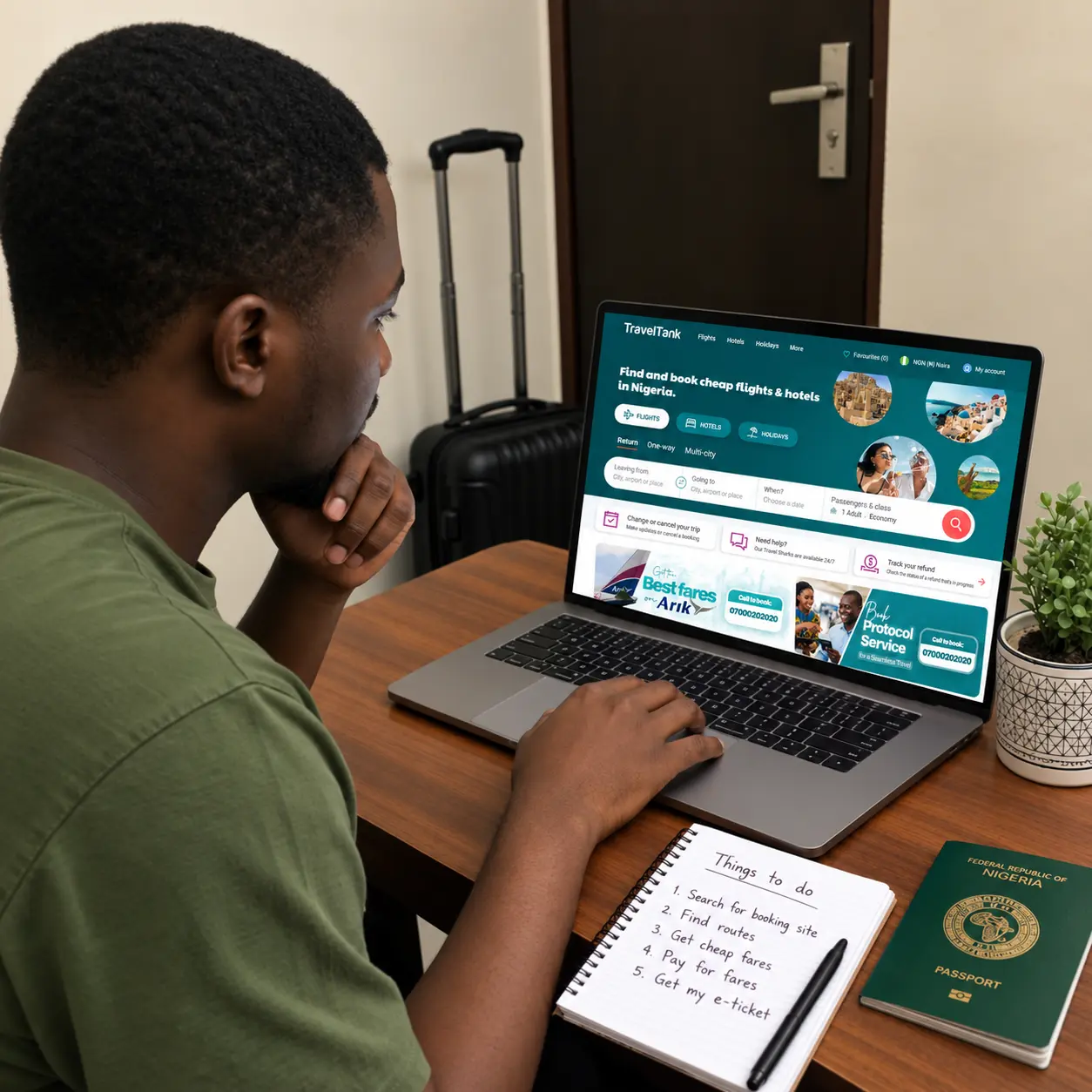
How to Book a Flight Online: A Step-by-Step Guide.
Reading Time: 19 minutesBooking a flight online is simply the process of searching for available flights to your destination, choosing the option that fits your schedule and budget, entering passenger details, paying or reserving the fare, and receiving a booking reference or e-ticket. For many people, the entire process can be quick when documents and payment are ready, […]

Markup-vs-commission-based-travel-affiliate-programs: What’s the Difference?
Reading Time: 8 minutesHave you ever wondered why some travel agents earn more than others? The secret often lies not in their follower count but in their choice of travel affiliate programs. Last year, a Lagos-based travel blogger spent six months promoting international hotel bookings through a commission-based travel affiliate program. She earned ₦180,000 total. Her friend, who […]
How to Earn ₦500,000/Month Reselling Flights and Hotels Online in Nigeria
Reading Time: 9 minutesThink about the last time someone you know booked an international flight. Did they do it alone? Or did they ask someone for help? Most travellers prefer booking tickets through a trusted person. Someone who can explain the prices, the visa requirements, and whether that stopover in Istanbul needs a transit visa. That person can […]