

The Nigerian Civil Aviation Authority (NCAA) projects air passenger traffic to rise from 15.9 million in 2023 to 25.7 million by 2029, backed by airport upgrades and expanding airline routes. (NCAA Industry Overview)
That is millions of Nigerians who need someone they can trust to book their flights, sort their visas, and make travel less stressful. That is why becoming a Travel Agent in Nigeria is very important now more than ever.
By the end of this guide, you will know exactly how to become a travel agent in Nigeria with little to no capital, what the legal requirements are, how earnings work, and the fastest way to get started today.
Ready to transform your love for travel into a source of income? Visit Travel Affiliate program; let’s show you exactly how to do it.
What Does a Travel Agent Do?
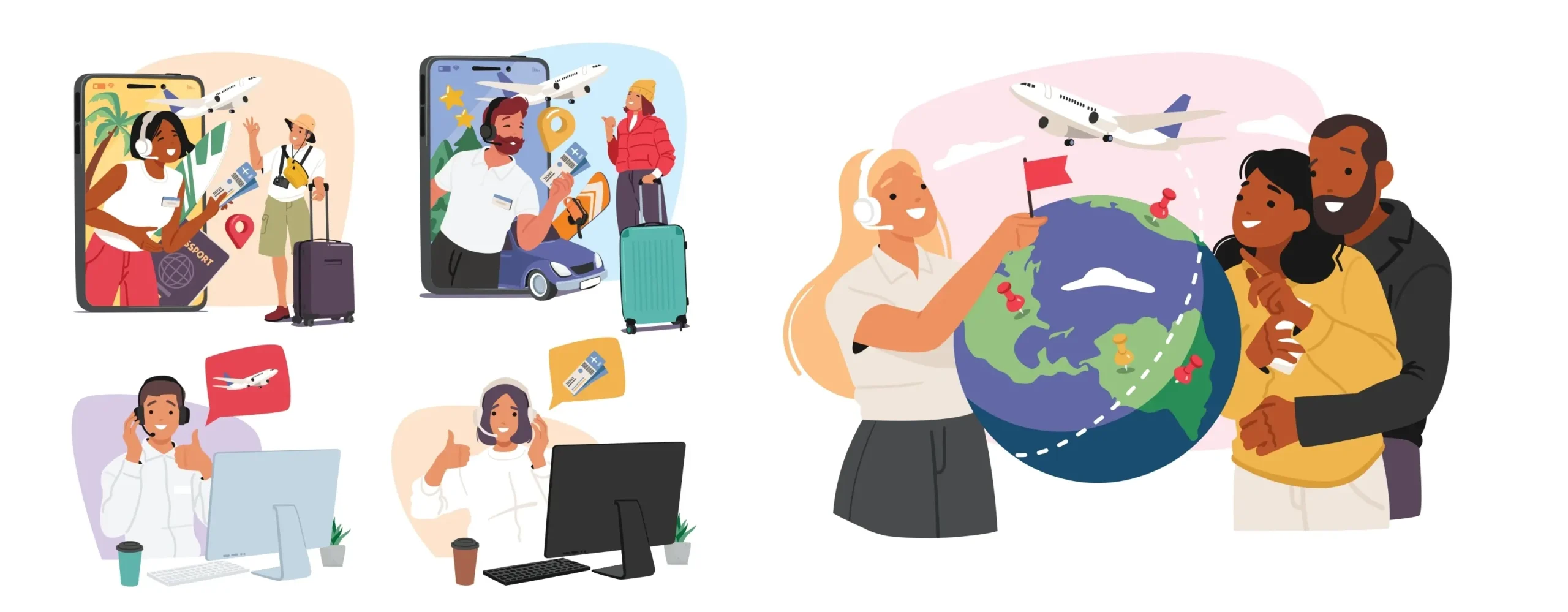
Anyone can search Google Flights. But most people travelling internationally are dealing with a combination of challenges that no app fully solves.
Currency is volatile. As of late June 2026, the official rate for naira sits around ₦1,380 per dollar, with the parallel market trading slightly higher. A flight priced today can cost a different amount by the time a client actually pays.
That creates confusion, and confusion creates the need for someone who can explain what is actually happening.
Visa requirements for Canada, the UK, Australia, and Schengen countries change regularly. First-time travellers don’t know what documents embassies actually want.
Students applying for study permits need guidance on financial statements, acceptance letters, and biometric appointments. Customers need someone to handle last-minute changes without panic.
That someone is a skilled travel agent.
Your value isn’t just booking a ticket. It’s knowing what to ask, when to ask it, and how to prevent expensive mistakes before they happen. That skill is worth paying for, and the right clients will pay well for it.
Why Become a Travel Agent in Nigeria?
Nigeria had about 10.5 million domestic passengers in 2025, a 10% increase year-on-year, making Nigeria Africa’s second-largest domestic aviation market after South Africa.
Murtala Muhammed International Airport in Lagos handles over 60% of all passenger and aircraft movement in the country. And according to IATA, over 2 million Nigerians travel internationally annually, with London topping the list. This volume creates a constant need for qualified agents.
International routes are also expanding. Air Peace relaunched Lagos – London flights. Emirates returned to Nigeria in 2024 with daily Lagos – Dubai service. More bilateral air service agreements mean more routes and more passengers.
That is a market you can enter with nothing but a smartphone, a reliable affiliate platform, and genuine client service skills.
Start for free — Join TravelTank’s affiliate programme here.
How to Become a Travel Agent in Nigeria: The Complete Step-by-Step Process
Path One: Start as a Travel Reseller (Zero Capital)
The fastest and most accessible way to become a working Nigerian travel agent is to partner with an already licensed travel platform and sell products through its booking system. You access their rates, add your own markup, and keep the difference.
TravelTank’s affiliate programme is designed precisely for this starting point. Here is exactly what the process looks like, step by step:
Step 1 — Register on the affiliate booking platform. The application is short and free. Go to traveltank.com/home/affiliates.php and apply directly.
Step 2 — Pass the affiliate verification check. This is a basic review to confirm your identity and that you are genuinely building a travel business.
Step 3 — Attend your affiliate onboarding session. TravelTank’s affiliate team schedules a training meeting with you personally. You learn how the booking platform works, gain insight on the industry standards, learn how to set and apply markups correctly, and receive any other support that you might need.
Step 4 — Start selling and earning. Once onboarded, you can sell:
-
- Domestic and international flights
- Hotel bookings
- Holiday packages
- Airport transfers
- Travel insurance
- Visa and immigration assistance
- Protocol services
What Makes TravelTank Affiliate Attractive?
A few things that make TravelTank’s affiliate model practical for someone starting with nothing:
White-labelling is free. Your tickets and vouchers carry your own business name, logo, phone number, and email, not TravelTank’s. You are building your brand, not reselling someone else’s.
SOTO tickets are available. SOTO (Sales Outside Territory of Origin) means you can book flights originating outside Nigeria and still pay in naira. This directly solves one of the biggest pain points for agents serving diaspora Nigerians abroad.
24/7 affiliate team support. You are not alone when a client’s booking has a problem at midnight. TravelTank maintains a dedicated team specifically for affiliate issues.
Live reporting dashboard. Track every booking, markup, and reconciliation in real time.
One thing to know clearly: the TravelTank affiliate earning model is markup-based, not commission-based. TravelTank gives you highly discounted fares. You decide your selling price.
The difference is your income. There are no credit facilities; you work with what you have, which keeps things simple.
To see the full range of travel products you can sell through TravelTank as an affiliate, read: Other Travel Services You Should Explore.
Path Two: Register as a Fully Independent Travel Agency (Requires Capital)
Once you’re earning steadily and ready to formalise, you will eventually want to register your own independent travel agency in Nigeria. This is a real investment, and the exact amount matters.
The NCAA requires the following from any independent travel agency:
-
- A registered private limited company with the Corporate Affairs Commission (CAC) showing a minimum paid-up share capital of ₦2,000,000
- At least two full-time staff who have completed a recognised airline ticketing and reservation course at an accredited training institution
- A non-refundable NCAA registration fee of ₦100,000
- NANTA membership, the National Association of Nigeria Travel Agencies, which is the umbrella body all licensed Nigerian travel agencies are expected to join
Do not skip any of these. Attempting to sell air tickets as an independent agency without NCAA registration is a regulatory violation. The full, official requirements are published on the NCAA Travel Agency Registration page.
This path is where you grow. Not where you start.
How Much Can You Earn as a Travel Agent in Nigeria?

Most major airlines have largely eliminated direct agent commissions. Many now pay 0–5%, and some pay nothing at all. This is exactly why the markup model used by TravelTank affiliates is more reliable than chasing airline commissions. You set your own rate on every booking.
Here is where the real margins typically sit in travel:
| Product | Typical Margin/Commission |
| International flights (markup model) | You set your own rate on net fares |
| Hotels | 8–15% from supplier, sometimes more with preferred relationships |
| Holiday packages/tours | 10–20% depending on the operator |
| Travel insurance | 15–25% in many markets |
| Visa assistance | Flat service fee (you set it) — typically ₦20,000–₦100,000+ by destination |
An illustration of the maths: if you book 10 international tickets per month and apply an average markup of ₦25,000 per booking, that is ₦250,000 from flights alone, before hotels, packages, or visa service fees.
That is not a promise. It is an illustration of the model. Your actual number depends on client volume.
One thing is always worth managing: currency risk. With the naira trading around ₦1,380–₦1,400 to the dollar as of mid-2026, international bookings are always FX-sensitive. Add a buffer into your quoted prices and always tell clients clearly what exchange rate assumption you have used.
The Best Niches for a Nigeria Travel Agent

These niches have consistent, high-value demand in Nigeria right now.
Canada travel agent in Nigeria: Canada remains one of the highest-demand destinations for Nigerians: for university education, skilled worker immigration, and family visits. Visa processes are complex, and document requirements shift often. A Canada-focused agent who genuinely understands study permit applications, visitor visas, and biometric requirements builds strong word-of-mouth in alumni and church networks.
Australia travel agent in Nigeria: Australia is a growing education destination for Nigerian students and a common migration pathway. Student visa documentation is thorough. Agents who understand the process convert well in university communities.
Umrah and Hajj packages: This is a year-round niche with deeply loyal clients. Important note: if you intend to organise complete pilgrimage packages, not just book individual flights, you will eventually need an Air Travel Organiser’s Licence (ATOL) from the NCAA. That requires ₦5,000,000 minimum share capital and a ₦7.5 million performance bond. Understand this boundary before making promises to clients.
Corporate travel management: Businesses need reliability above all else. Corporate clients pay more, stay longer, and refer other businesses. If you can handle last-minute changes calmly and document everything clearly, corporate accounts are among the most stable income in this industry.
Diaspora-focused travel: Nigerians abroad booking return trips or onward connections have specific needs, excess baggage for family goods, layover visa guidance, and travelling with children or older relatives. If you have strong connections with any Nigerian diaspora community, this niche alone can sustain a full-time business.
Common Mistakes to Avoid as a New Travel Agent

Promising visa approvals. Visa decisions are at the discretion of the consular, not the agent. When you guarantee an outcome you cannot deliver, you set yourself up for angry clients, refund demands, and a reputation that travels faster than any referral.
Going silent after payment. This single habit destroys more travel agent careers in Nigeria than anything else. Clients expect updates, so give them updates as often as possible. Proactively confirm document deadlines, flag interview preparation, and communicate immediately if anything changes.
Racing to the bottom on price. Competing on price alone attracts clients who haggle constantly and refer nobody. Agents who charge for genuine expertise attract clients who return and refer their network.
Mixing personal and business finances. Register your business name, open a separate account, and track every transaction from the start. The agents who burn out are usually the ones who could never tell if they were actually profitable.
Ignoring the exchange rate. A quote given in naira on Monday can already be inaccurate by Thursday. Always build a currency buffer into your pricing, and always tell clients what exchange rate assumption you applied.
Ready to Start Your Travel Agent Journey?

Understanding how to become a travel agent in Nigeria does not have to mean years of expensive training before you earn a naira. The affiliate model gives you an honest, accessible starting point right now.
You do not need an office or ₦2 million in share capital today. What you need is a reliable platform, proper training, and the discipline to serve clients well.
TravelTank’s free affiliate programme gives you access to flights, hotels, holiday packages, visa assistance, and more, with white-labelled bookings, SOTO ticketing in naira, a 24/7 support team, and a live sales dashboard. You build your brand. You control your markup.
The demand for trusted Nigeria travel agents is real and growing. The tools to start are free. What you do next is up to you.
Join TravelTank’s Affiliate Programme today — register for free and start booking.
Frequently Asked Questions
Can I become a Travel Agent in Nigeria with no money?
Yes. The question of how to become a travel agent in Nigeria without capital is answered by the affiliate model. TravelTank’s programme is free to join, requires no registration fee, and earns you money through markups, not a salary or commission requiring NCAA accreditation. Your investment at this stage is time and client service.
Do I need a degree to become a travel agent in Nigeria?
No. NCAA registration for an independent agency requires airline ticketing training for your staff, not personal academic credentials. Most successful Nigerian agents come from various backgrounds.
How much is NCAA registration?
₦100,000 non-refundable registration fee, a minimum ₦2,000,000 paid-up share capital in your company, and at least two staff with recognised airline ticketing and reservation training. These requirements apply when you register as an independent agency, not when you start as an affiliate.
Is IATA accreditation required to operate as a Travel Agent?
No. IATA accreditation gives independent agencies direct access to airline ticketing systems (the BSP), but it requires your NCAA certificate as a prerequisite and involves significant financial criteria. For most Nigerian agents starting out, selling through an already-IATA-connected platform is the practical alternative. You can read about IATA’s accreditation requirements at iata.org.
Can I work from home as a Travel Agent?
Yes. Most affiliate-model agents operate entirely from a smartphone and laptop. A physical office only becomes relevant for certain corporate clients or once you’re building a full independent agency
You might also like to read
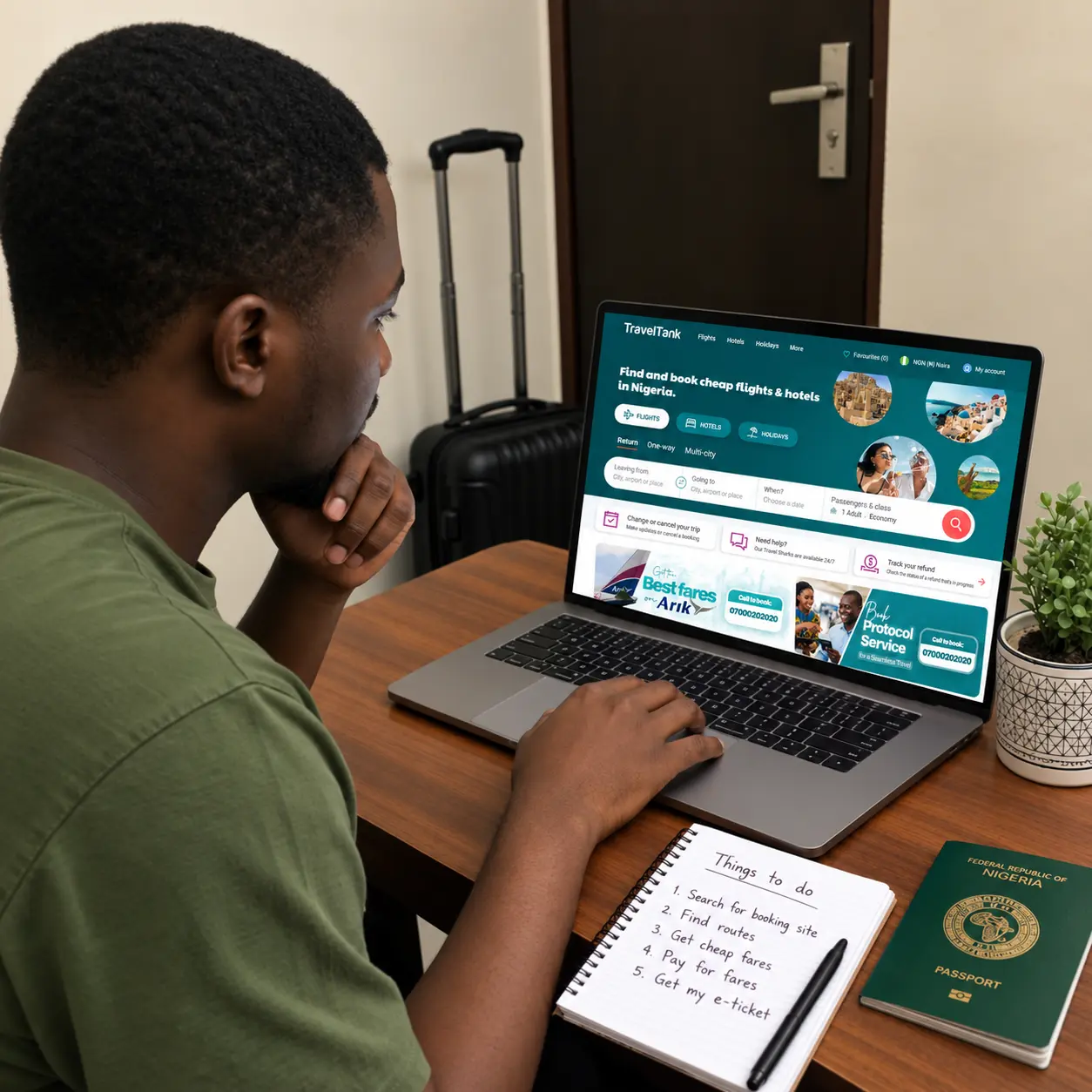
How to Book a Flight Online: A Step-by-Step Guide.
Reading Time: 19 minutesBooking a flight online is simply the process of searching for available flights to your destination, choosing the option that fits your schedule and budget, entering passenger details, paying or reserving the fare, and receiving a booking reference or e-ticket. For many people, the entire process can be quick when documents and payment are ready, […]

Markup-vs-commission-based-travel-affiliate-programs: What’s the Difference?
Reading Time: 8 minutesHave you ever wondered why some travel agents earn more than others? The secret often lies not in their follower count but in their choice of travel affiliate programs. Last year, a Lagos-based travel blogger spent six months promoting international hotel bookings through a commission-based travel affiliate program. She earned ₦180,000 total. Her friend, who […]

How to Earn ₦500,000/Month Reselling Flights and Hotels Online in Nigeria
Reading Time: 9 minutesThink about the last time someone you know booked an international flight. Did they do it alone? Or did they ask someone for help? Most travellers prefer booking tickets through a trusted person. Someone who can explain the prices, the visa requirements, and whether that stopover in Istanbul needs a transit visa. That person can […]