

Getting your UK admission letter may feel like the finish line. It isn’t; getting your UK Student Visa is. And unlike your admission, which came down to grades and a personal statement. Your student visa comes down to things like: paperwork, dates, names, and money sitting in an account for exactly the right number of days.

We went through the current UK student visa process for Nigerian students the way you’re about to. Pulling the step-by-step from GOV.UK’s Student visa pages and from VFS Global, who now run the UK visa centres in Nigeria. A couple of things have changed recently that most guides online don’t mention. Your visa appointment isn’t with TLScontact anymore, and if you’re approved, you won’t get a sticker in your passport at all. Here’s all the current information you need to be aware of.
What Is the UK Student Visa and Who Needs One?
Officially, it’s called the Student route. It’s what lets anyone from outside the UK or EU come and study in a UK institution for longer than six months. And it replaced the old Tier 4 visa in 2020, though many applicants still call it by the old name.

If you’re a Nigerian and you have a course longer than six months, then this is your visa. Full degrees, master’s, PhDs, most pre-sessional English programmes, all of it falls under the Student route. (Short courses under six months sometimes fall under a Visitor visa instead, but that’s the exception, not a said rule.)
The thing worth internalising early is that your university decides whether to admit you. UKVI decides whether to let you in. Two completely different gatekeepers. Passing one says nothing about the other.
UK Student Visa Requirements for Nigerian Students
If we remove the technical jargon the official UKVI requirements come down to five things:
- A Confirmation of Acceptance for Studies (CAS) from your university; without this there’s no application to begin with.
- Enough money for your course and living costs, which we’ll get into properly later
- English proficiency, either through an approved test or a confirmation from your university that your prior education already covers it.
- Parental consent, if you’re 16 or 17.
- A TB test certificate; Nigeria is on the Home Office’s list of countries where this is compulsory for stays over six months.
And another requirement often not talked about is just consistency in data records. Your CAS carries specific details tied to your name, course, and fees, and everything you send after that needs to match it.
Documents Required for a UK Student Visa Application
According to GOV.UK, only two documents are actually mandatory on paper: your passport and your CAS reference number. Everything else, and there’s usually quite a bit of “everything else,” depends on your situation:
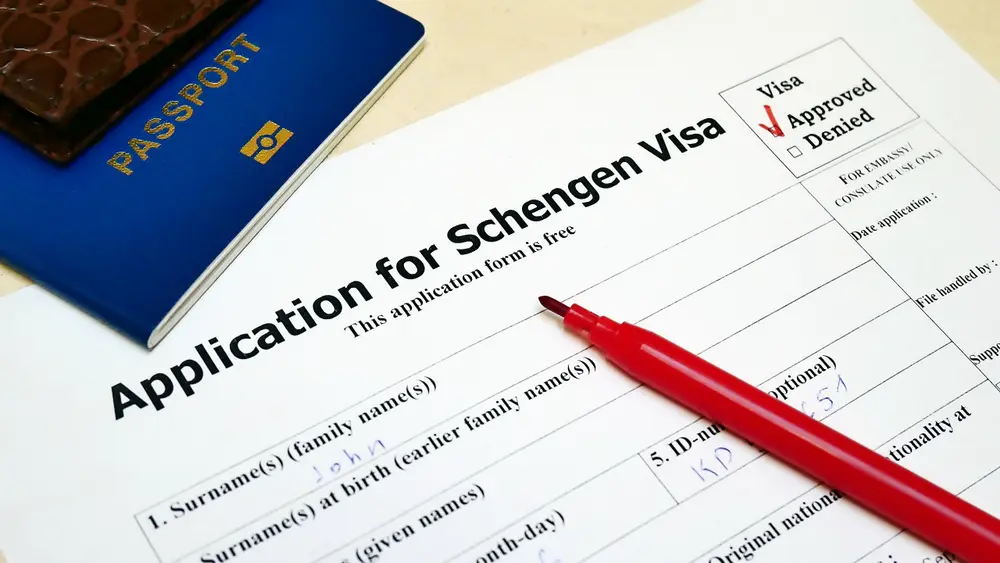
- Proof of funds, if you’re not already exempt
- An ATAS certificate, if you’re doing certain master’s-level or above courses in engineering, science, or tech (check whether yours needs one; it can take weeks to process, so don’t leave it until the last minute)
- Parental consent and proof of relationship, if you’re under 18
- TB test results
- Written consent from whoever’s sponsoring you, if you’ve had sponsorship for your fees or living costs in the past year
Here’s a small thing that causes disproportionate stress: spelling. If your passport says “Chukwuemeka” and your bank statement says “Chukwuemaka,” that’s not a typo a caseworker will just wave through.
How to Apply for a UK Student Visa From Nigeria (Step-by-Step)

Most of this happens online. One part happens offline.
You’ll get your CAS from your university first, then head to GOV.UK to fill in the application itself. You can do this up to six months before your course starts. From there, you’ll pay the visa fee and the healthcare surcharge, and prove your identity. Either through the UK Immigration: ID Check app on your phone or by booking an appointment at their office.
That appointment is where a lot of people get confused because the process changed in late 2024. UK visa applications in Nigeria used to go through TLScontact. They don’t anymore, and that’s because VFS Global took over. And appointments now run through centres in Lagos (Ikeja and Victoria Island), Abuja, Port Harcourt, Enugu, and Kano. Booked directly through VFS Global’s Nigeria portal. You’ll go in, give your fingerprints and a photo, and either hand over or upload your documents depending on what the centre asks for.
Then you wait. GOV.UK’s own processing time page currently puts the standard decision at around three weeks from Nigeria, starting from your appointment date, not from when you first submitted the form online. If you’re approved, there’s no sticker to collect or card to pick up at a post office; you’ll set up a UKVI account and link your passport to it, and that digital record becomes your eVisa.
If there’s one piece of advice worth repeating, it’s this: apply as soon as your CAS lets you. Not because the process is unusually slow, but because giving yourself six months of runway means a missing document or a delayed appointment is an inconvenience and a case of concern.
UK Student Visa Financial Requirement: How Much Money You Need to Show
This is where most refusals actually happen: people don’t have the money, and most of the time they don’t present their financial records well.
On top of whatever tuition you still owe (your CAS will say exactly how much), you need to demonstrate:
- £1,529 a month, up to nine months, if your course is in London
- £1,171 a month, up to nine months, if it’s anywhere else
That money has to sit in an account, yours or your sponsor’s, with their consent, for 28 days in a row, and that 28-day stretch has to end within 31 days of when you apply. GOV.UK’s own example makes the timing clear: apply on 1 January, and the funds needed to have been sitting there, untouched, since at least 1 December. Dip below the number for even a day inside that window, and, as far as the requirement’s concerned, it wasn’t met.
Many nationalities are exempt from having to prove any of this upfront. But Nigeria isn’t one of them, so this step applies to most Nigerian applicants. If you’ve got a loan or a sponsor covering things, the evidence needs to come straight from them. GOV.UK’s guidance on acceptable formats is worth a read before you submit anything.
One more thing worth knowing: caseworkers are specifically trained to notice money that shows up suddenly right before the 28-day window starts. An unexplained deposit two weeks before you apply reads very differently to them than savings that built up naturally over months, even when the money itself is completely legitimate.
UK Student Visa Interview: What to Expect and How to Prepare

Not everyone gets called in for one. Some applicants are, usually because something in the file needs a closer look, or just as part of routine checks. It’s normally done over video call, and it tends to circle around the same handful of things: why you picked this course and this university specifically, what your academic path looks like (gaps included), where your money’s actually coming from, and what you’re planning to do once you’re done.
Applicants who do well aren’t the ones with a memorised script, interviewers can tell, and it doesn’t land well.
Dos: What to Get Right Before You Apply
- Apply the moment your CAS is issued, don’t wait.
- Read your CAS letter. It tells you exactly what UKVI expects from you.
- Keep your balance untouched for the full 28 days. Don’t move money around “just to be safe.”
- Check every name, date, and figure across your passport, CAS, and bank documents.
- Book your TB test early, clinics in Lagos and Abuja get backed up.
- Talk through your course and your finances out loud before any interview, confirmed or not.
- Get certified translations for anything not already in English.
- Ask your university’s international office when you’re unsure. That’s what they’re there for.
Don’ts: Common Mistakes That Get Applications Refused
- Don’t let your form, your CAS, and your documents tell different stories.
- Don’t leave documents or appointment booking until the final weeks.
- Don’t drop a large sum of money into your account right before the 28-day clock starts.
- Don’t let your balance dip below the threshold, even for a day, during those 28 days.
- Don’t walk into an interview with rehearsed answers that fall apart under a follow-up question.
- Don’t assume your English test or old qualifications automatically qualify, confirm it with your university first.
- Don’t submit scans so blurry a stranger couldn’t read them.
- Don’t hide a past refusal, UK or otherwise. It’s treated far more seriously than the refusal itself ever was.
UK Student Visa Processing Time and Fees for Nigerian Applicants
The visa itself costs £558, whether you’re applying from outside the UK or switching from inside it. On top of that sits the Immigration Health Surcharge, currently £776 for every year of your visa, which is what gives you access to the NHS while you’re there. GOV.UK breaks down exactly how that’s calculated based on your course length. You’ll also want to budget for whatever VFS Global charges for your appointment in Nigeria, and, if you want it, a faster decision at extra cost.
Speaking of speed: GOV.UK’s current figures put the standard turnaround at three weeks from Nigeria, though that clock only starts once you’ve completed your identity check or attended your appointment. Fees and surcharge amounts get revised periodically; they last changed in April 2026, so treat any number here, including this one, as a starting point. Check GOV.UK directly before you pay.
What Happens After Your Visa Is Approved
If you’re picturing a sticker in your passport or a plastic card to collect from a post office, that’s not how it works anymore. UK immigration status went fully digital a while back, so approval means setting up a UKVI account and linking it to your passport; that becomes your eVisa, and it’s what proves your status everywhere from the border to your landlord to your part-time employer.
A few things worth sorting before you fly: you can arrive up to a month before your course starts if it’s longer than six months, or a week before for shorter ones. Generate your share code ahead of time so proving your status at the airport doesn’t turn into a queue-side scramble. And even though you’ve already used them for the visa, carry your CAS, offer letter, and financial evidence in your hand luggage. Border Force can still ask for the paperwork behind your digital status. Once you land, register with your university quickly; most sponsors tie this to a strict deadline written into your visa conditions.
Common Reasons UK Student Visas Get Refused and How to Avoid Them

Refusals are not random, and they’re usually about one mistake. They cluster around predictable things:
Money is the big one. Not having enough of it, most of the time, or showing it the wrong way, missing the 28-day rule, a deposit that looks like it appeared from nowhere, or a bank letter that doesn’t match the format UKVI expects.
Then there’s inconsistency in names, dates, or figures that don’t quite match across your CAS and your application, which reads as carelessness even when it’s genuinely just a typo.
Sometimes it’s about intent. If your course doesn’t obviously connect to your background, or your interview answers sound rehearsed rather than real, a caseworker might start doubting why you’re actually applying.
And sometimes it’s just paperwork quality, a missing signature, an uncertified translation, or a scan nobody could actually read.
Almost all of it is avoidable if you start early: read your CAS properly, get your finances settled well before the 28-day window opens, keep your documents consistent, and be upfront about anything in your history. If you are refused, your decision letter will explain why, and depending on the grounds, you may be able to request an administrative review. UKCISA, the UK’s independent advisory body for international students, is a solid place to go for guidance on that next step.
FAQs: UK Student Visa for Nigerian Students
How much money do I need to show for a UK student visa from Nigeria?
Whatever tuition you still owe, plus £1,529 a month if you’re studying in London or £1,171 a month elsewhere, for up to nine months, held in an account for 28 days straight before you apply.
How long does the process actually take?
Around three weeks from the point you complete your identity check or attend your appointment, according to GOV.UK’s current figures. That’s not from the day you filled in the online form.
Do I book my appointment with TLScontact?
No, that changed in late 2024. It’s VFS Global now, with centres across Lagos, Abuja, Port Harcourt, Enugu, and Kano.
Will I get a physical visa or a BRP card?
No. It’s a digital eVisa linked to your UKVI account. No sticker, no card.
Does everyone get an interview?
No. Some applicants are called in, usually to clarify something in the file, but it’s not guaranteed either way.
Do I need IELTS if I already studied in English?
Not necessarily. If your previous education was taught and assessed in English, and your university confirms that it covers the requirement. You may not need a separate test, but check your CAS to be sure, since it varies by course.
You might also like to read
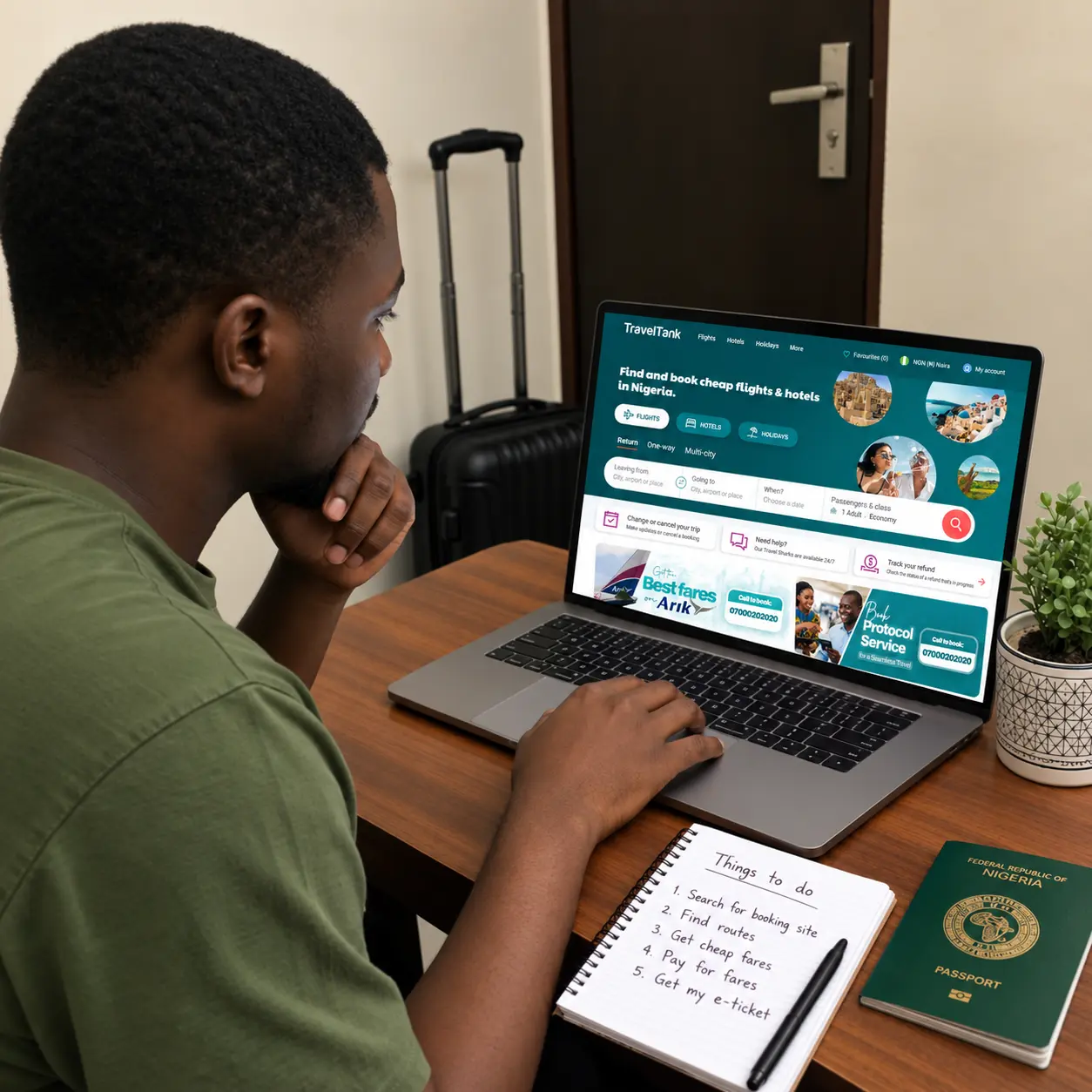
How to Book a Flight Online: A Step-by-Step Guide.
Reading Time: 19 minutesBooking a flight online is simply the process of searching for available flights to your destination, choosing the option that fits your schedule and budget, entering passenger details, paying or reserving the fare, and receiving a booking reference or e-ticket. For many people, the entire process can be quick when documents and payment are ready, […]

Markup-vs-commission-based-travel-affiliate-programs: What’s the Difference?
Reading Time: 8 minutesHave you ever wondered why some travel agents earn more than others? The secret often lies not in their follower count but in their choice of travel affiliate programs. Last year, a Lagos-based travel blogger spent six months promoting international hotel bookings through a commission-based travel affiliate program. She earned ₦180,000 total. Her friend, who […]

How to Earn ₦500,000/Month Reselling Flights and Hotels Online in Nigeria
Reading Time: 9 minutesThink about the last time someone you know booked an international flight. Did they do it alone? Or did they ask someone for help? Most travellers prefer booking tickets through a trusted person. Someone who can explain the prices, the visa requirements, and whether that stopover in Istanbul needs a transit visa. That person can […]