Seychelles
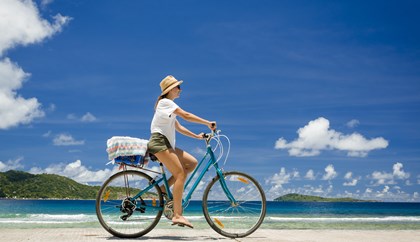
Woman on bike on the beach
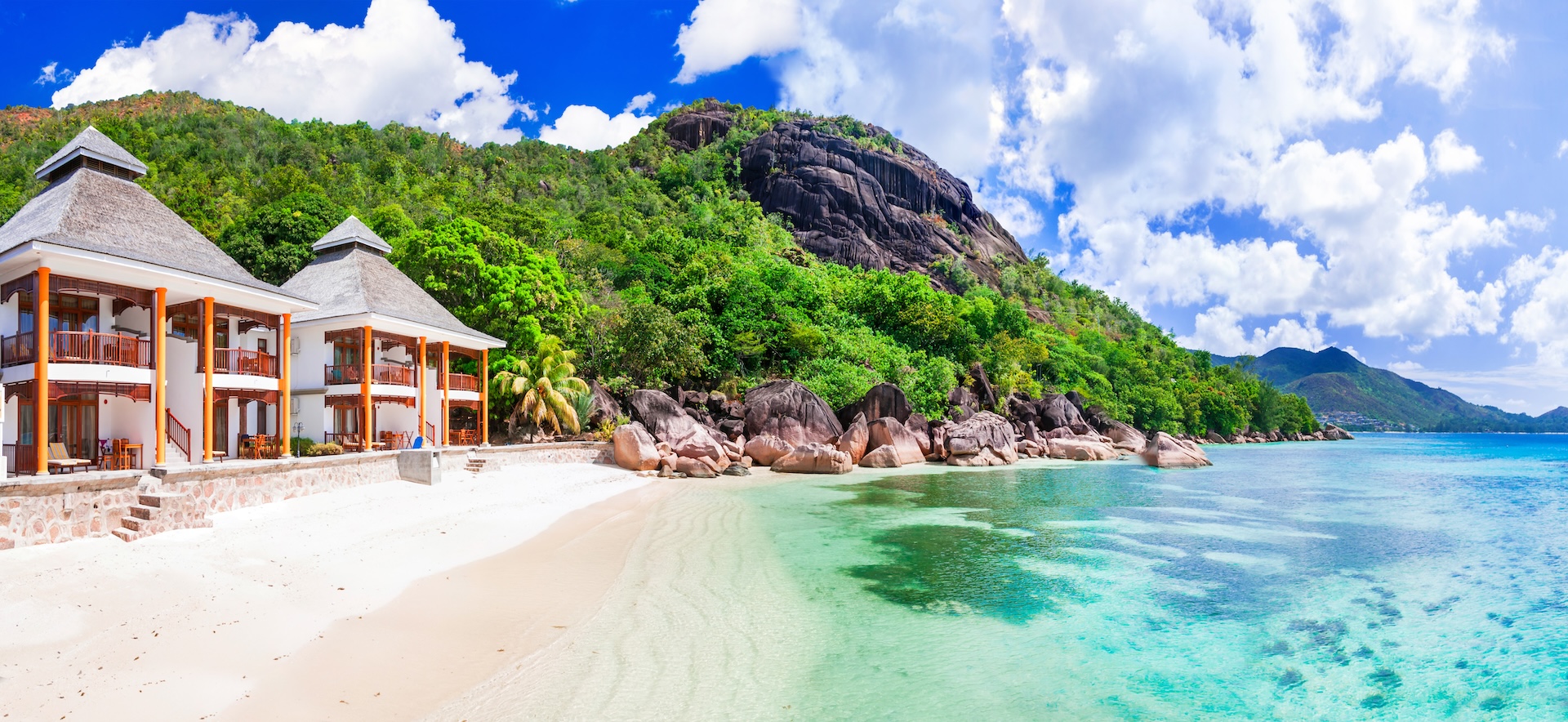
European explorers took what today is Praslin Island's nature reserve to be the original Garden of Eden, and no wonder — the primeval forest of Vallee de Mai has changed little over millions of years, and giant Aldabra tortoises still roam the archipelago populated by an incredible diversity of endemic plant and animal species. Out of the 115 islands that make up the Seychelles only 12 are inhabited — by Homo sapiens, that is — making for splendidly pure natural landscapes, unspoilt beaches, and some of the world's most fantastic diving.
The overwhelming majority of visitors to the Seychelles stay on one of the archipelago's three main islands: Mahe, Praslin, or La Digue.
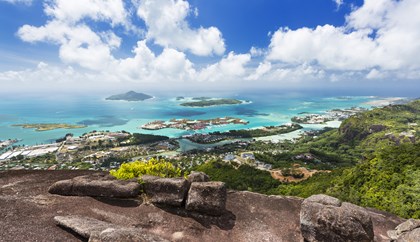
Mahe, the largest, is also the liveliest, with the most generous offer of shopping and entertainment. The capital city — Victoria — is also located on Mahe, many flocking to its Sir Selwyn Selwyn-Clarke Market (often simply referred to as "Victoria Market") for produce and souvenir shopping. Mahe is most often any traveller's fist point of entry to the Seychelles, for it is on this island that the nation's only international airport is located.
Praslin, albeit much smaller, has plenty in the way of nature escapes — the UNESCO-listed Vallee de Mai reserve makes for some incredible hiking through primeval mangrove forest, where the endemic (and rather wacky-looking) coco de mer grows undisturbed.
La Digue, the smallest of the three, will please those looking for seclusion — the only means of transportation here is cycling, which means no vehicles or other disturbances — just you, picture-perfect beaches, and star-dotted night skies.
Day-trips and private excursions can be arranged to nearby islands like Curieuse or Silhouette, as well as some of the more remote outer islands.